
‘The Testament of Ann Lee’: Amanda Seyfried’s Fervor Is Transcendent in This Unlikely Spectacle
The Testament of Ann Lee is strange in the most fundamental of ways: It’s not quite like anything I’ve encountered before and (a little ironically) that makes it tough to shake. Director Mona Fastvold’s hymn-rivered historical epic works on its audience in a way that mimics its titular character’s faith — it haunts, but in a way that only strengthens its power.
I approached my first viewing with caution. On the surface, it’s a two-hour drama about an 18th-century revivalist who, through her charisma and conviction, persuades her followers that she’s the Second Coming of Christ. Along the way, Ann Lee (Amanda Seyfried in a career-best performance) convinces her Shakers to forsake sex, cross the Atlantic Ocean, and build a commune in the woods.
Despite its sprawling scope, the three-act film is mesmerizing for the majority of its hefty runtime. So much so that I knew I needed to see the spectacle again — and in a theater.
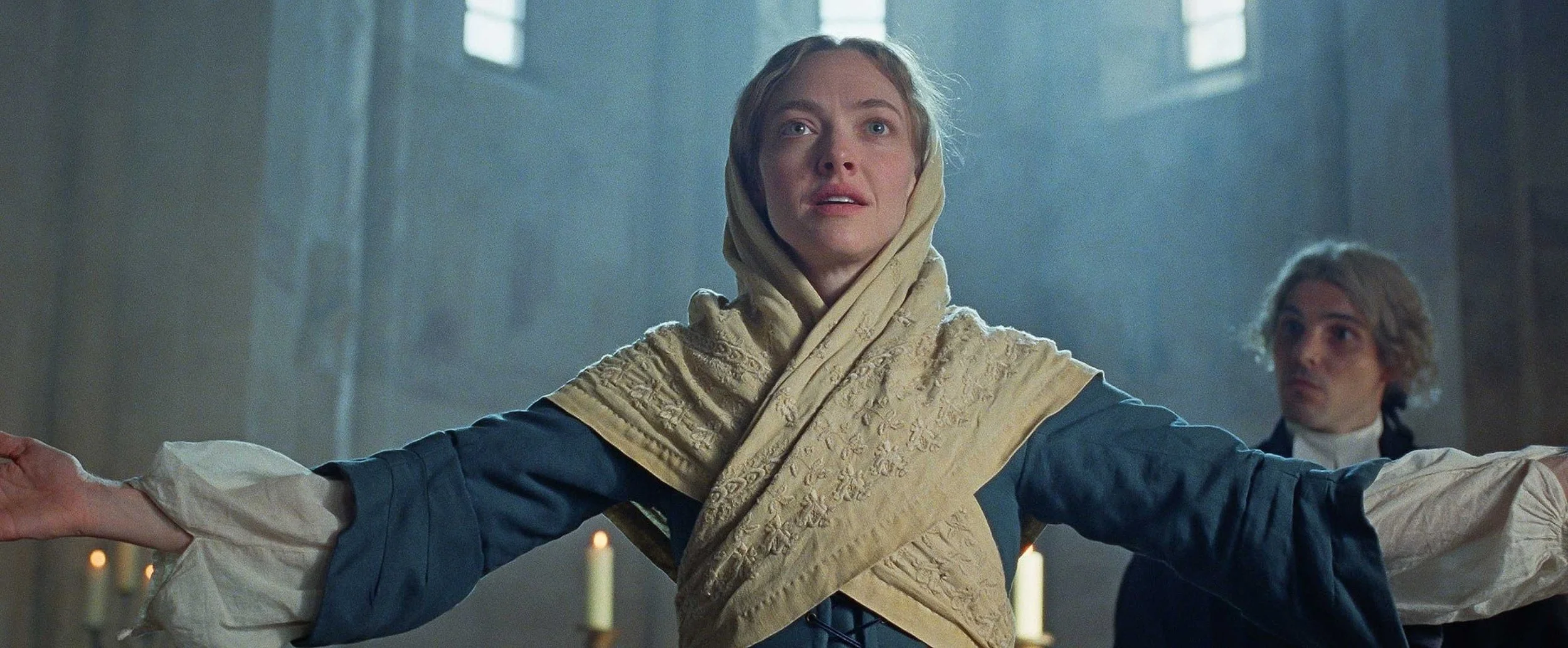
Creating a satisfying spectacle requires a leader with the vision to bring together so many individual talents. And, clearly, Fastvold knows how to assemble a team, from choreographer Celia Rowlson-Hall (Vox Lux), who taps into the raw, ecstatic thrum of the Shakers’ movements, to Oscar-winning composer Daniel Blumberg (The Brutalist), who called the project “one of the most experimental [and] extreme” he’s ever worked on (via The Hollywood Reporter). What words fail to capture — and what such, immovable faith demands — is best portrayed through striking sequences of full-bodied fervor.
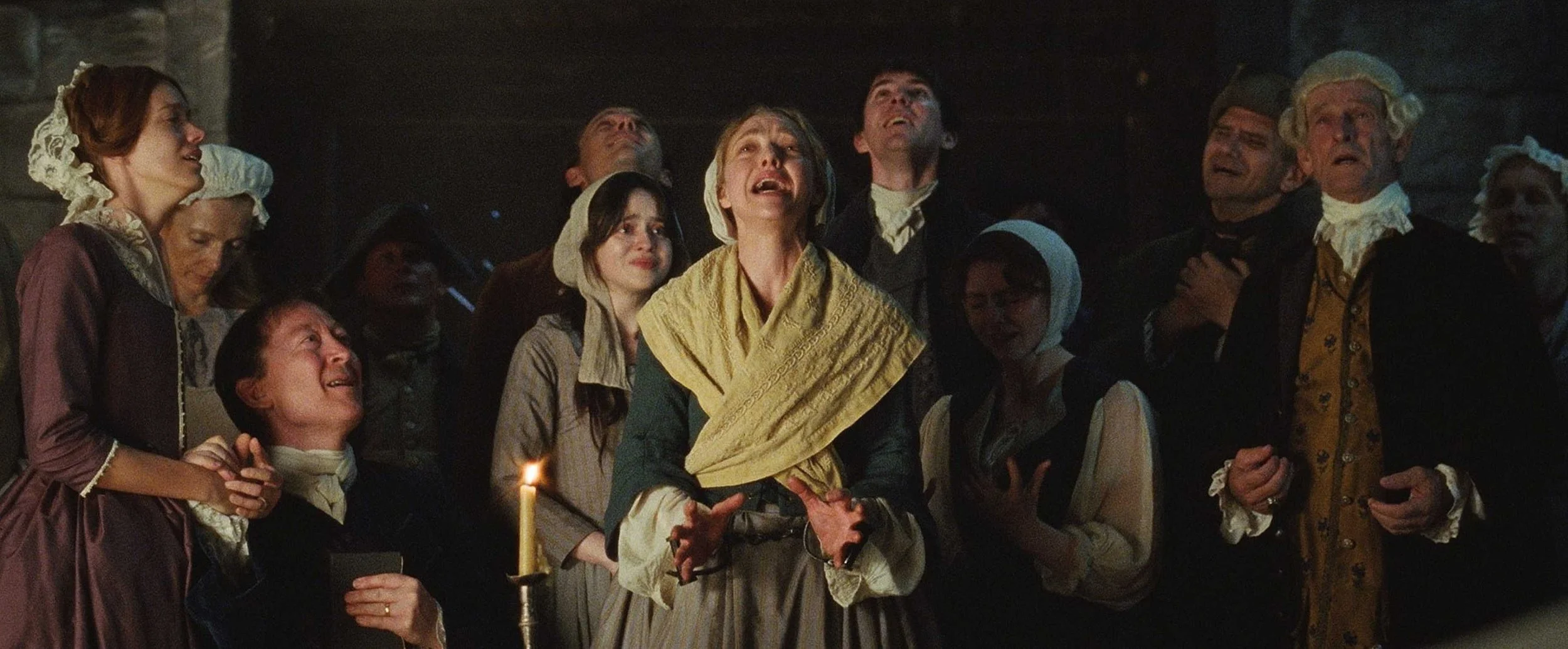
Wisely, the film opens with one of these hymns, and with Shakers dancing and singing in the woods. It’s startling, and it dangles the promise of something delightfully weird thrumming beneath the surface of a biopic about the leader of a religious sect. One of these uninhibited Ann acolytes is Mary (Thomasin McKenzie, Leave No Trace), who serves as the film’s narrator.
Faithful and hardworking from a young age, Ann and her brother, William (Lewis Pullman, Lessons in Chemistry), are soon drawn into the fold of a radical religious movement that encourages communal displays of ecstatic devotion. These musical confessions read more as exorcisms. People bear their pain and then they move — together. It’s hard not to admire the devotion or how Fastvold and her team capture it, especially when Ann’s unimaginable loss and brutal persecution — faith-shaking by any measure — only deepen her resolve.
During a post-film Q&A, which was part of CAFILM’s Contenders Series at the Smith Rafael Film Center, Seyfried talked about how Fastvold created a “safe environment” perfect for letting go. She also shared that the “secret” to her performance was reminding herself that “no one was there” to witness the real Ann Lee. The Oscar nominee perfected an 18th-century Manchester accent — but did she really? To borrow Seyfried’s sentiment, who knows? What is clear: Seyfried is transcendent thanks to this creative liberation, which allowed her to tap into the most tender and feral parts of herself.
Not unlike The Brutalist, The Testament of Ann Lee does have its limitations. Although it's a sweeping historical epic, it leaves a lot unaddressed, particularly when it comes to American settler colonialism and enslavement. The film itself draws attention to white settlers’ violence against the land’s Indigenous peoples as well as the abduction and enslavement of people from Africa. Ann and her followers, who are devout believers in gender and racial equality, can’t believe their eyes. At the same time, the film does little to interrogate the tension between someone who believes in equality but can’t seem to grasp that they, too, are settlers crafting a supposed utopia on stolen land.
The over-reliance on a narrator — by definition, contrived — is baffling. Sure, Mary’s voiceover provides some helpful context when used sparingly, but there are also times when she’s telling us something that we’re being very explicitly shown. Or talking over Ann. Mostly, the guardrails feel at odds with something that’s otherwise so unbridled.
Even so, it’s hard not to be won over by the absolute conviction on display here — not just Mother Ann Lee’s, which convinces her followers to journey across an ocean, but Fastvold and Seyfried’s too. There’s something so earnest in the film’s approach that, when you’re in the thick of it, makes the whole endeavor feel less cult-like and more like a collective driven by shared purpose and perspective.
During the Q&A, Fastvold reminded attendees that she’s from Norway but has chosen to make a life in America. At the core of her work, the filmmaker is attempting to understand why this place calls to her, even during unrelenting times. To that end, The Testament of Ann Lee raises more questions than it answers, but it also isn’t looking to make believers out of its viewers — it’s looking to awe and challenge them.