
'Primetime' As a Skeleton Key to Understanding FilmSlop, My Fixations, and My Foolish Existence
Being on the cusp of Gen Z is weird. We inherited a performative, algorithm-driven internet that we had no part in building. I don’t remember a time before the machine, and I only remember growing up around the elements that made the machine stronger. Existence is weird, and I still haven’t really gotten used to my inheritance despite living in it, but I’ve been working on trying to understand it. Specifically, I’ve been using movies as a vessel to understand that weirdness. For the last three years, I’ve been using FilmSlop to circle two distinct (or so I thought) threads of cultural rot. If you’ve been following our publication, you’re probably familiar with them:
The Western Gaze: Stories that the American empire tells to justify itself (the hidden enemy, the preemptive strike, the muscling through of American imperialism).
The Flattened Feed: The very weird way that we now experience media (the algorithmic churn, the endless scroll, and the constant, agonizing performance of the self).
I’ve always understood these threads separately, considering them disconnected symptoms of a broken world.
Every project of Lance Oppenheim’s that I’ve seen has consistently left me with a "Holy shit, he can do that? Is that allowed?" reaction. Primetime does what I once thought impossible by deftly connecting the above two FilmSlop threads. It proves that the paranoia of the early 2000s and the brain-rot of the modern doomscroll are inextricably linked. I’m not sure if one is the direct ancestor of the other, but Oppenheim gives us a distinct thread that can be traced from the trial of Saddam Hussein straight to the videos of the AI Watermelon Guy who is constantly cheating on his AI Orange Girl wife.
I’ve only ever explored these threads as isolated problems, but watching Oppenheim connect them unlocked something in my mind and struck a personal nerve. In the same way that the filmmaker uses To Catch a Predator to conduct an autopsy of our historical moment and the corruption of media, I will attempt to use his film to conduct an autopsy of FilmSlop (and also how I’ve really just been trying to figure out how to exist in a world filled with what can frankly be described as bullshit). Moving through this current world is confusing, but pulling it apart through art, like Primetime, makes the whole foolish endeavor survivable.
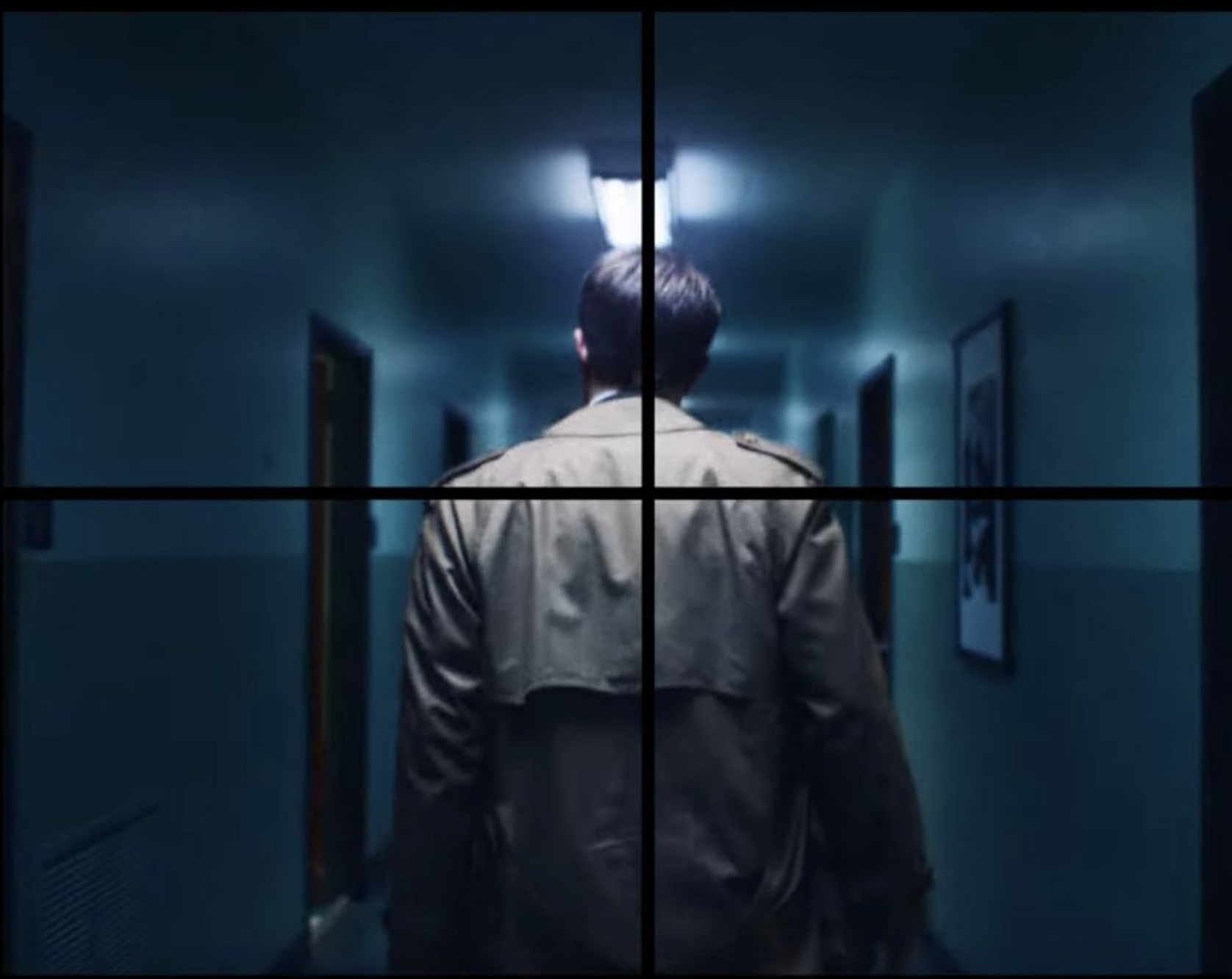
Robert Pattinson in ‘Primetime’ (2026) dir. Lance Oppenheim
1. We Have Inherited Hell (Probably)
I’d like to start with the current moment. The film that captures our modern unreality best is Our Hero, Balthazar. In the introduction to my interview with filmmakers Boyson and Camilleri, I wrote about how the film's two teenagers use the exact same digital environment for vastly different performances: Balthazar feigns distress about school shootings to garner sympathy, while Solomon feigns menace to project strength. Their class positions are on entirely opposite spectrums, but both are united by a desperate need for strangers to recognize them online. When they finally meet in the real world, the identities they developed through their phones don't just disappear. As I said in that introduction, "If tragedy is quantified by views, personal worth is quantified by likes."
When I sat down for the interview with the filmmakers, we talked extensively in their own words about how insane the internet economy has made us. Ricky Camilleri summarized the film's cynical edge perfectly when he told me, "We exist in a collective social rot, and I don't feel bad taking shots at any of it." He continued, "The best satire is so cutting. It is merciless and brutal to almost everyone involved."
Nobody is born into this world with the inherent urge to perform hyperbole and distress for strangers. But we were born into a digital era that rewards this exact kind of surveillance. As Primetime points out, we have all essentially Truman Showed ourselves.
Three years ago, George and I started FilmSlop as a place to write in our most authentic voices. We adopted "Slop" as our mascot because we wanted something that felt messy and unpolished. We were sick of writing that felt perfectly packaged and optimized for engagement. We wanted to let go of the confines of convention and just feel things. This was before "AI slop" became an inescapable buzzword. When the AI mania hit, I scrapped together a manifesto (my essay Redefining Slop) on what we stand for and how we push against optimization.
In that piece, I identified the rot of algorithmic media as something that existed long before AI. AI is just another successor in a long line of tactics used to contaminate media. Primetime identifies its own parallel genealogy, starting in a Dateline set in the early 2000s.
The film opens on its own current moment – the period piece opens on Chris Hansen’s show and shows us an analogous form of flattening the media. It’s the beginning of the death of nuance: real evil is flattened into cartoonish villainry for television ratings. Hansen operates in the same way that our current algorithm does – everything is Capital-C Content, and the line between entertainment and reality is paper-thin.
2. The Bush Administration Has Ruined My Life In More Ways Than One
Oppenheim shrouds us in the imagery of the War on Terror from the get-go. The backdrop of the early 2000s is rich: we are bestowed with pieces of the media circus of Saddam's trial, the reporting of the Iraq invasion, zero-dark-thirty adjacent raids, and War on Terror money turning suburban police into an armored column for a TV shoot. War abroad became reality TV at home, and reality TV at home became war abroad. It all operated at the exact same programming altitude. Oppenheim sticks us in Bush-era politics and keeps us there – and, in a sense, we never really left.
I remember a friend –who I’m still very close to, and who has always been pure of heart – asking me in full earnestness when we were six years old if I was a terrorist because I was Muslim. He had no ill will; it was just what he was hearing through the television.
I don’t know what life was like for Muslims in America before 9/11 because I was born in 1999. I only know of a post-9/11 surveillance state. To understand that space more, I talked to filmmaker Iranian-American Kevin Hamedani in my interview about The Saviors about paranoia and what it meant to become the invisible enemy. He talked to me about his experience with profiling, seeing his family experience Islamophobia, and internalizing it himself. He tells me about being on a plane after 9/11 and catching himself profiling a passenger who looked just like him: "I created a narrative in my head," he admitted. Hamedani has spent his artistic career creating thoughtful art that bites back against learned paranoia, but his experience is universal.
We needed an enemy. The general public couldn't catch the elusive evil or find the missing WMDs, so we needed a way to feel like we were a part of it. Our collective impotence and inability made us hunger to experience something visceral. In the same way that audiences were trapped in the television catching pedophiles with Hansen, we are trapped in screens today, living through TikTok and consuming variations of violence, completely grounded in our own impotence. I brought up this exact fear of powerlessness in my interview with Felipe Bustos Sierra about Everybody to Kenmure Street. We talked about his loss of faith in protest and how making the film changed what turning up meant to him. It’s hard to push yourself to make change when the only ways to ask for change are gradual – instead of organizing, television and screens give us a cheaper substitute. Hansen used the perfect storm of post-9/11 fear to become America's Hero. Hansen bypassed the hard work of solidarity and gave you a show that you could feel good about, without leaving your house.
3. Brief Break For Positivity (We’re Not Totally Ruined)
Hansen was handed NBC's machinery and a blank check for voyeurism, while others had to fight tooth and nail for the opportunity to tell their own stories. In my interview with Badie Ali of Watermelon Pictures, we discussed how he has been an activist his whole life (carrying printed photographs at campus demonstrations back in 2004) and how he now fights platforms and buyers just so Palestinian stories get the distribution they deserve. As he put it, "It’s time we build our own table." With hard work, we can finally tell our own stories.
My favorite recent example of reclamation happened last year. I remember sitting in a theater (the AMC Metreon 16, the greatest theater ever no less) and watching The President's Cake. After twenty years of Iraq being used purely as war fodder or broadcast material for American moral reckoning, I finally saw a film that allowed Iraqis to tell their own story. The fight for ownership of the lens has begun to turn. There is hope! This is the movement that Badie Ali has been championing and continuing to make strides in. I’m genuinely excited to see how it continues to evolve.
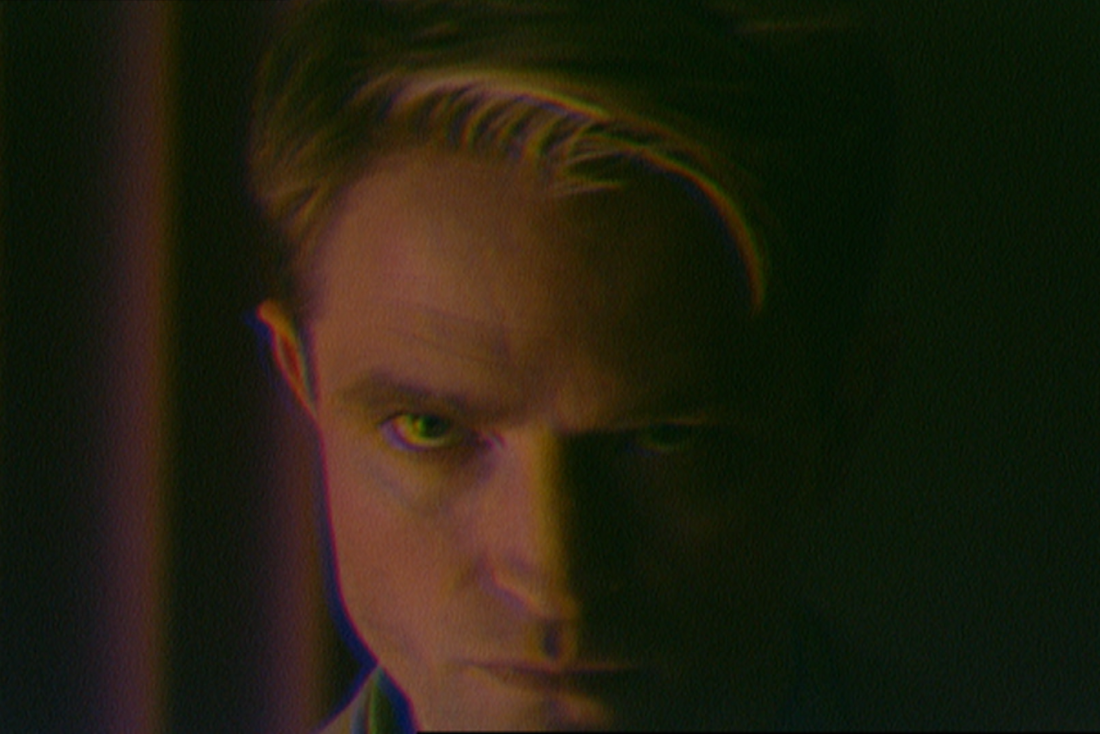
Robert Pattinson in ‘Primetime’ (2026) dir. Lance Oppenheim
4. "What would have happened if I wasn't here?"
American media obviously hasn't been telling the story of the real victims of its empire. So what have we been doing?
What is perhaps Hansen’s most iconic line in the film –"What would have happened if I wasn't here?" – maps the American imperialist complex onto a reality TV host. We are Big Brother. We need to muscle our way into the outcome so that we can justify our own presence.
This brings us directly to my favorite topic, the Western Gaze. In my conversation about Filipiñana with Rafael Manuel, we dug into how international funding structures demand an aesthetic of poverty from the Third World. The West expects the “Global South” to be seen as irreparably poor, reducing entire regions to an exotic problem. He argued that rather than pointing a camera at marginalized people to secure prestige, we must recognize the limits of the Western gaze. He stresses that "we need to look inward and see what it is we do, or more importantly, … what we don’t do that perpetuates the cycle".
Even Hansen admits that when he went to India to investigate child slave labor, he was (as Pattinson's character confesses) "doing it for an Emmy." He claims to be cleansing the world of ancient evil, but he is really just using the suffering of others for domestic television clout.
The American newsroom instinct is perverse (a purveyor of the pervert panopticon). Contrast this with Poh Si Teng, a former executive who left her media career to direct American Doctor. In my interview with Teng, she details how her ability to make something so profound was grounded in the absolute rejection of that American newsroom instinct.
5. We Are Still in Hell (Probably) But There Is A Way Out
When I spoke with Russell Goldman, director of recently acquired (woohoo) SXSW standout Sender, we connected over his experience as a teenager writing reviews that fit a mold but revealed nothing of himself. "I wrote reviews growing up that told the reader next to nothing about myself or what inspires me," he said. We had both learned how to produce work that was part of a system.
I’ve dabbled in criticism as a form of counter-culture, trying to remove as many optimized influences as possible. There is no money in FilmSlop; there is no vertical content. There is a limited cache of stuff that could corrupt me. Even then, I find myself sometimes "picking the brand of being a critic over the practice of being one," as I confessed in my review of Chandler Levack’s Mile End Kicks. We have inherited quite a bit. Inheriting the surveillance state sucks, but we’ve also inherited how easily we run the sting on ourselves, optimizing our own identities to fall into the exact same trap.
Russell Goldman escaped the trap. He stopped writing and started making art that felt wholly individual and unique to his personality. "Your own identity is so important to the art that you put out into the world," he tells me. This is a fun counterweight to the tragedy of Primetime. We can actively choose our own individuality over whatever optimized mold the industry expects of us.
Epilogue: I Do Not Want To Be A Cynic Even If That Feels Impossible
It’s easy (and sometimes even fun) to be a cynic – to say that all screens are weapons, all media is entrapment, and we are utterly desensitized and doomed. Oppenheim’s film has no overt comment on whether or not to be cynical. He deftly showcases the historical moment.
I think there is plenty of love to be found. In my interview about her short, Mon Taxi with Meriem Sakrouhi, we talk about screens as a counter-image. The same devices that built our sting houses are the physical spaces where her film immortalizes grief, intimacy, and love across an ocean.
Primetime gives you the world you have inherited. Through my writing, I’ve been working on figuring out what I want to do about it. I haven't figured it out, but for now, what I will do is stay in my slop.
For more Primetime content check out our other review, linked here.